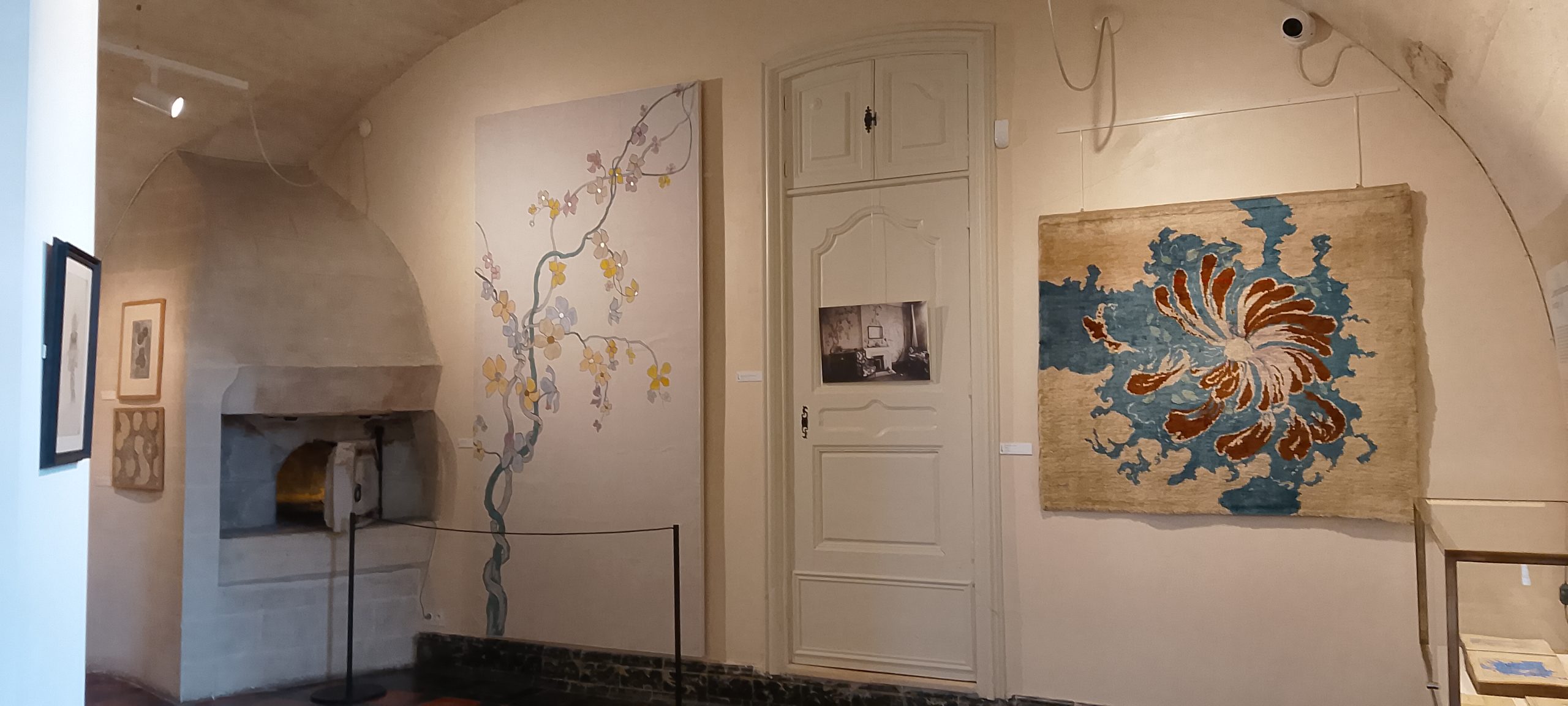
The exhibition Gustave Fayet and his imaginary gardens at Saint-André Abbey, in Villeneuve-Lez-Avignon, is a tribute to the collector-patron and artist, for the centenary of his death. Gustave Fayet was inspired by the gardens of his wine properties to create remarkable gardens and works of art in various media, from painting, ceramics, fabrics or carpets.
Works that resonate with its homes and pleasure gardens
The family of Gustave Fayet (1865-1925) made its fortune in the 18th century by transporting alcohol via the Canal du Midi. Gustave Fayet and his imaginary gardens deals with the sources of inspiration, the deployment of works in resonance with his residences and pleasure gardens. Paintings represent his family’s castles in Béziers and Narbonne. Very early on, Gustave Fayet was introduced to the art of drawing and landscape painting by his father Gabriel Fayet (1832-1899) and his uncle Léon Fayet (1826-1880). In 1899, he inherited a considerable fortune from his father and uncle, which he grew through his professional activities. He also became a collector of modern painting including Van Gogh, Gauguin, Redon, Matisse… Free of charge, he worked as a Curator at the Béziers Museum. But his avant-garde tastes do not correspond to those of the public and the Municipality. In 1905, he decided to leave Béziers and moved into an apartment on rue Bellechasse, in Paris, where he showed off his ever-growing collection of works of art. Very quickly becoming cramped, he transferred this collection to the Château d’Igny – subsequently this castle was bequeathed to the Town of Igny, in Essonne. Georges Moser (1899-1964), a renowned landscaper based in Versailles, designed the gardens by consulting the plans proposed by Gustave Fayet.
The Abbey of Fontfroide, in Narbonne, acquired with his wife in 1908, is Gustave Fayet’s masterpiece. This Cistercian abbey, then in ruins, was restored over ten years. Gustave Fayet composed the gardens with the planting of a thousand cypresses, rose bushes…
In 1910 and 1911, he received Odilon Redon (1840-1916), these meetings were decisive in the artistic vocation of Gustave Fayet. The two form a deep friendship. Gustave Fayet acquires his Blacksand then dreamlike works. For the Library of Fontfroide Abbey, Redon created the majestic decor: The Day, Night And The Silence. This painter who participated in the genesis of Symbolism perceived the artistic potential of Gustave Fayet, and encouraged him: “ What spirituality do you want to bring into your work? » He was taken aback at first, he was leading his professional life and his passion for art simultaneously but without positioning himself as an artist. Redon becomes his main model.
Dream and fantasy
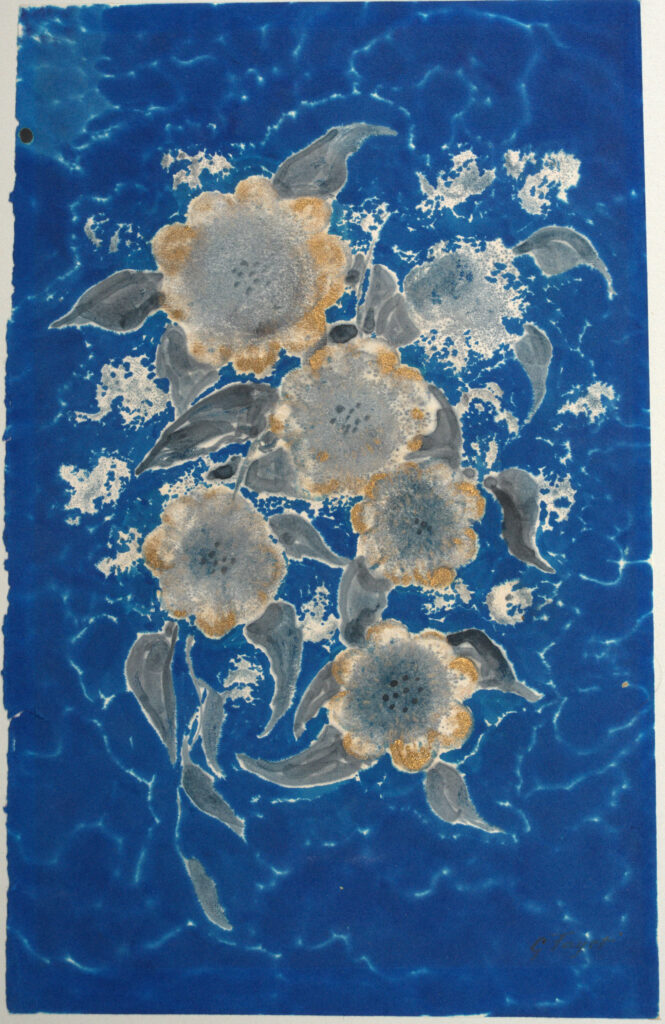
The exhibition shows watercolors on oil and also on blotter – Gustave Fayet is the initiator of this technique. What he likes are the random effects of the ink diffusing.
The Villa Costebrune, near Toulon, inspires Mediterranean gardens and decorative panels, one of which has been preserved and is on display. Gustave Fayet sends an inventive letter to his daughter Yseult – the garden project is drawn and commented on. It was near this villa that he met Elsa Koeberlé (1881-1950) for whom he acquired the Saint-André Abbey. He often goes there to visit his friend. A watercolor shows her as a gardener, pushing a wheelbarrow, alongside Génia Lioubow.
An entire section is devoted to imaginary gardens. Gustave Fayet’s watercolors could illustrate the theme of the Gardens of Verona in Italy, subject of a collection by his friend, the poet André Suarès (1868-1948). He was one of her greatest admirers and wrote articles on her rugs. Gustave Fayet is renowned for his floral patterned rugs. A photograph represents the exhibition at the Pavillon Marsan, the current Museum of Decorative Arts, in Paris.
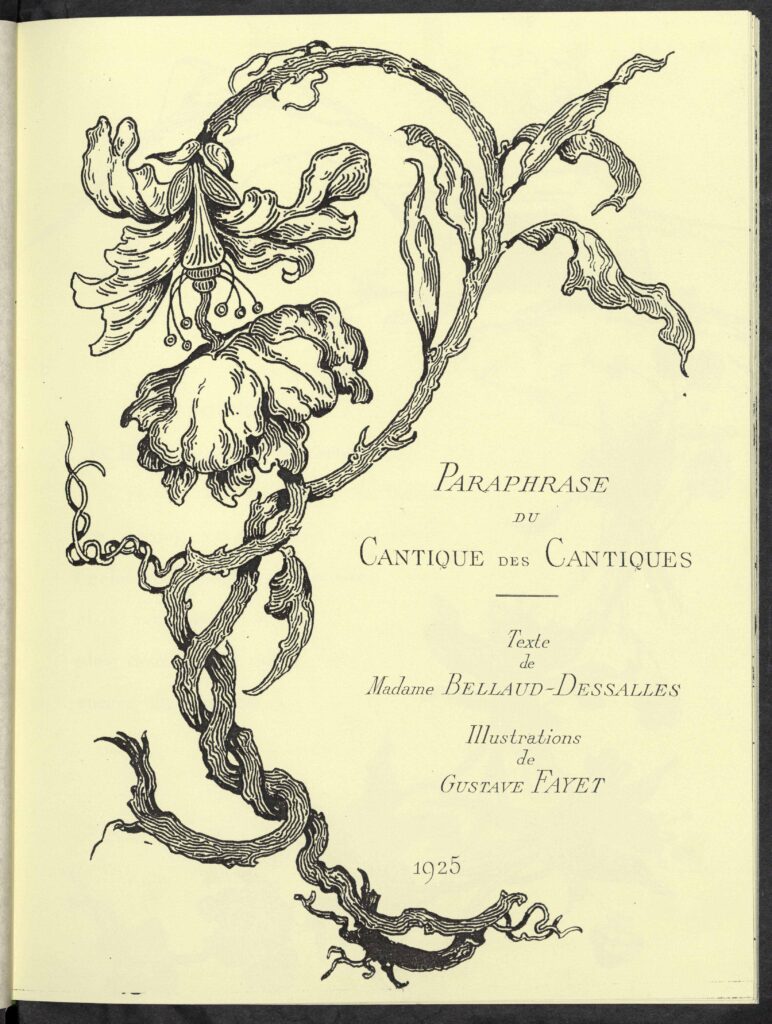
Passionate about literature and bibliophile, Gustave Fayet illustrates with ornamentation The Flowers of EvilIndian poems, Song of Songs…The work Flowers which he created in 1925, the year of his death, is an imaginary and testamentary herbarium, dedicated to his grandchildren: “ Here it is only dreams and fantasy – it is the garden of the good fairies, where the plants are happy and always adorned with the most harmonious colors; where they live forever. » He encourages children to be creative and explains to them that doing a task in a school notebook is no big deal, because from a task something marvelous can be born.
Fatma Alilate
Exposure Gustave Fayet and his imaginary gardens
Saint-André Abbey
Villeneuve-Lez-Avignon
Until August 2, 2026
Exhibition curator: Pierre PinchonProfessor of contemporary art history, Aix-Marseille University, UMR 7303 TELEMME-CNRS and Olivier SchuwerHead of general coordination, Saison Fayet research program, with the participation ofElodie Cottrezart historian.
Room panels: students of the Master 2 History of Modern and Contemporary Art (Course 1 Research), Aix-Marseille University: Olivier Barriol, Romane Chabin, Martine Chevallier, Loana Dumond, Erinne Guerit, Lilia Meier-Meunier, Marie Nerini, Noémie Van-Assche
Travel Source
Discover the world easily and comfortably with Merpati Airlines. From comprehensive travel guides and dream destination recommendations to practical tips, we provide everything you need to plan the perfect trip. Explore exotic locations, find the best deals on flights and hotels, or uncover travel packages tailored to your style. With interactive maps, traveler reviews, and authentic local insights, we’re your trusted travel companion. Start your adventure today!