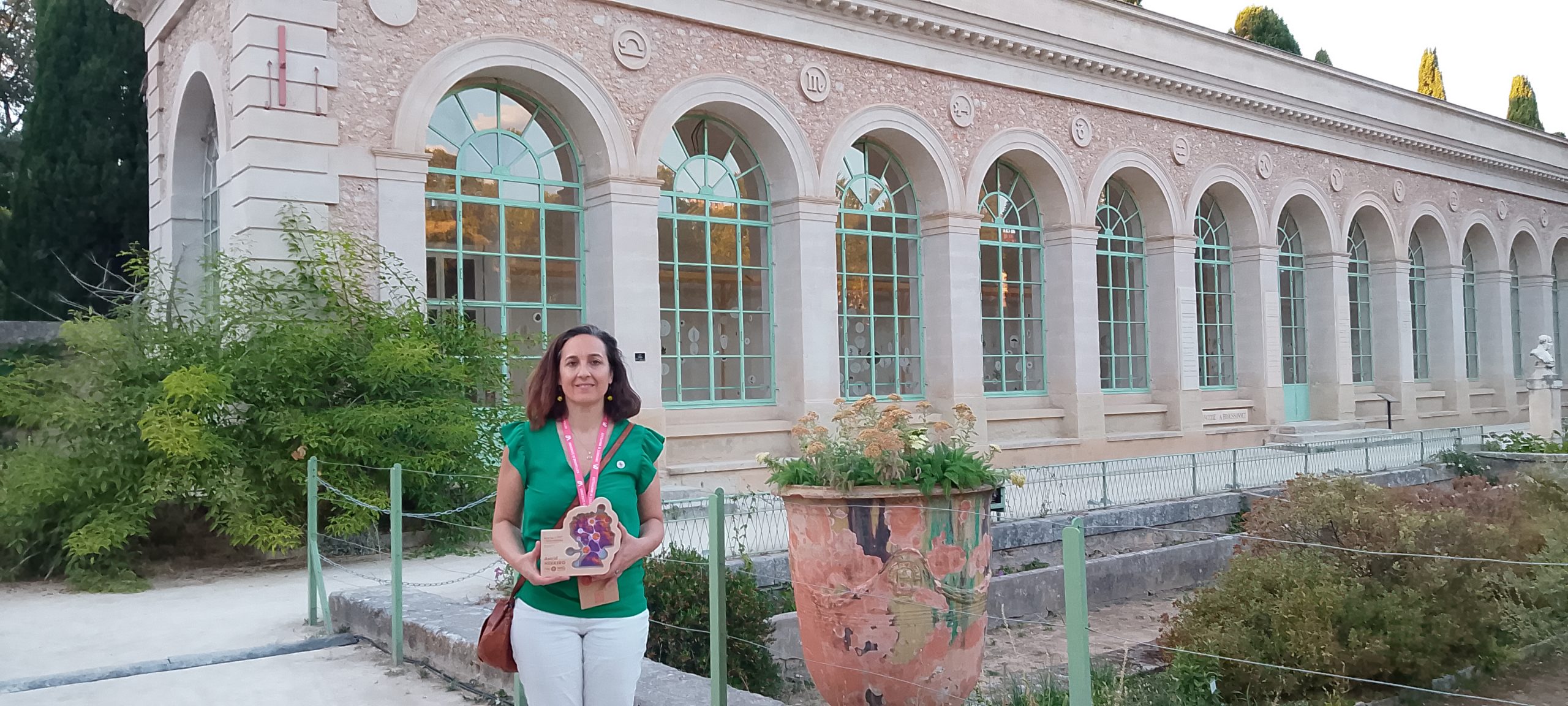
Astrid Herrero, hepato-biliary and liver transplant surgeon, department manager at Saint-Eloi Hospital, is winner of the 2026 Innovation Prize in the Biology-Health category, for the Flow Graft digital platform. Developed by the Montpellier-based start-up Graft Smart, Flow Graft technology optimizes real-time traceability of organ samples and transplants, coordination and logistics between transplant stakeholders. During the 2026 Innovation Awards Ceremony chaired by Philippe Augé, president of the University of Montpellier, Astrid Herrero expressed her concerns about the drop in the rate of organ donations, an indicator which reflects the state of our society.
Fatma Alilate : How was the idea of Flow Graft born, in organ donation transplantation?
Astrid Herrero : With the CHU collection and transplant coordination team, we thought of a digital solution to help us improve the logistics chain necessary to allow organ collection until transplantation in the recipient. The donor can be anywhere in France. And there is a verification of the eligibility of the organs, if they are of quality. Once this step has been completed, the Biomedicine Agency, which is a state agency, will allocate these organs to recipients waiting on a national list. This list is made with scores established by doctors based on severity and degree of waiting. In practice, there is a donor in Lyon who will be able to give his liver to a recipient in Montpellier, his heart to a recipient in Strasbourg, his kidneys in Bordeaux and his lungs in Rennes. Everything must be coordinated, transport, access to operating theaters.
FA: You said it had to be absolutely short.
AH : And obviously for the transplant to be successful, the time during which the organ is not vascularized – this is called cold ischemia – must be as short as possible for the organ to function properly. It’s all about timing and coordination.
F.A. : How was Flow Graft created with a start-up?
AH : The start-up Graph Smart developed the tool. I presented the specifications, the stages of transplantation. And they did the programming of the software. It’s all the expertise, the experience of the human terrain that we have transposed digitally.
F.A. : What does this technology bring?
AH : All the digitization and fluidification of this entire chain. It’s like a control tower with a timeline of estimated times and actual times. And in real time, all those involved in transplantation and this chain can see where the harvest is, where the graft is. And we can adapt to organize the transplant. It is a tool that has been developed by all transplant services in France. I hope that the public authorities and finances will follow to be able to use this tool.
F.A. : What does this Innovation Prize mean to you?
AH : This prize represents recognition of very long work, an initial idea which seemed insurmountable, yet very simple. And in the end, the project begins to see the light of day. This Prize will make Flow Graft even more visible. And I hope that we can deploy it throughout the country because if this solution is not used everywhere, it will not be able to work.
F.A. : You said at the ceremony of the Innovation Prize that for the first time, there is an increase in the refusal of organ donations and that this is an indicator of the state of French society.
AH : Yes, we are very worried by this refusal rate which is increasing, although it has been stable for years, around 30% refusals in France. And what’s more, this rate unfortunately increases among young donors. These are always terrible, dramatic stories, but you have to imagine that the organs continue to live through other people. And at the level of society, it is the most beautiful thing we can give, to be able to bring other people to life through our organs. I don’t think there is a greater demonstration of altruism. We caregivers who are in contact with stories of death and tragedy, we also see life. And obviously in these situations, the support of loved ones for this organ donation is absolutely sought, and that is why we say that this question of donation must be addressed during life with loved ones because in fact at the worst moment, this question of donation will have to be answered. If loved ones are not prepared, if there has not been this discussion, the decision is never easy to make. And today we receive sentences like: “ Society hasn’t given us anything, so we won’t give to society. » There are also religious conflicts that can intervene, beliefs that mix. So at the time of the question of donation, which will be a brutal, urgent moment, finally when I say urgent it is within 48-72 hours that there are discussions on organ donation, then all of a sudden it is so violent that in fact if society itself is violent on a daily basis, how can we respond to this positioning? This is a real social issue. This question of giving is prepared, discussed, worked on through exchanges, debates at school, in middle school, in high school, in our professions, our families. The question of donation, when it really arises, we are never in a calm and serene situation to answer for the one who has died. And in an ultra-violent society where individualism takes precedence a little more every day, the gift of oneself for others, without return, without anything, is not easy. It never really was, there was always 30% refusal. But this refusal rate is increasing. In any case, it doesn’t go down. And we have waiting recipients who are dying, due to lack of organ donations.
FA: Is there also less communication on the subject?
AH : I don’t think so, there is Organ Donor Day every year, June 22, the little green ribbon. But yes of course, we need to communicate even more, better debate on this subject which is a difficult subject. You also need to understand what organ donation is. It deserves a lot of time. This is a very delicate subject. It takes a lot of teaching, to be able to explain in a simple way what it represents, what death is in brain death, that is to say that death is brain death, but the organs continue to live.
Comments collected by Fatma Alilate
Astrid Herrero, PUI 2026 Innovation Prize, Biology-Health Pole
Travel Source
Discover the world easily and comfortably with Merpati Airlines. From comprehensive travel guides and dream destination recommendations to practical tips, we provide everything you need to plan the perfect trip. Explore exotic locations, find the best deals on flights and hotels, or uncover travel packages tailored to your style. With interactive maps, traveler reviews, and authentic local insights, we’re your trusted travel companion. Start your adventure today!