
I had heard stories about Macao of my good friend, Venus, who was born and grew up there.
“It’s not like elsewhere,” she said seriously. “I honestly think that Macao is the best city in the world, although I know that I am partial.
And after having had the chance to see Macao for myself, during a three-week trip between Macao, Hong Kong and Taiwan, I understood exactly what she was talking about.
Related reading: 5 Macao hidden gems beyond casino floors

Macao through the eyes of the inhabitants
We are riding a green bus wrapped in Hong Kong, and on time we crossed the border in the sumptuous coastal flexion of Macao.
Macao’s brilliant roofs, the pulsating lights of the casinos reflected in Lake Nam Van. Large Lisboa Hotel Fanning Grand and Fort, visible throughout the city. An emblem of excess.
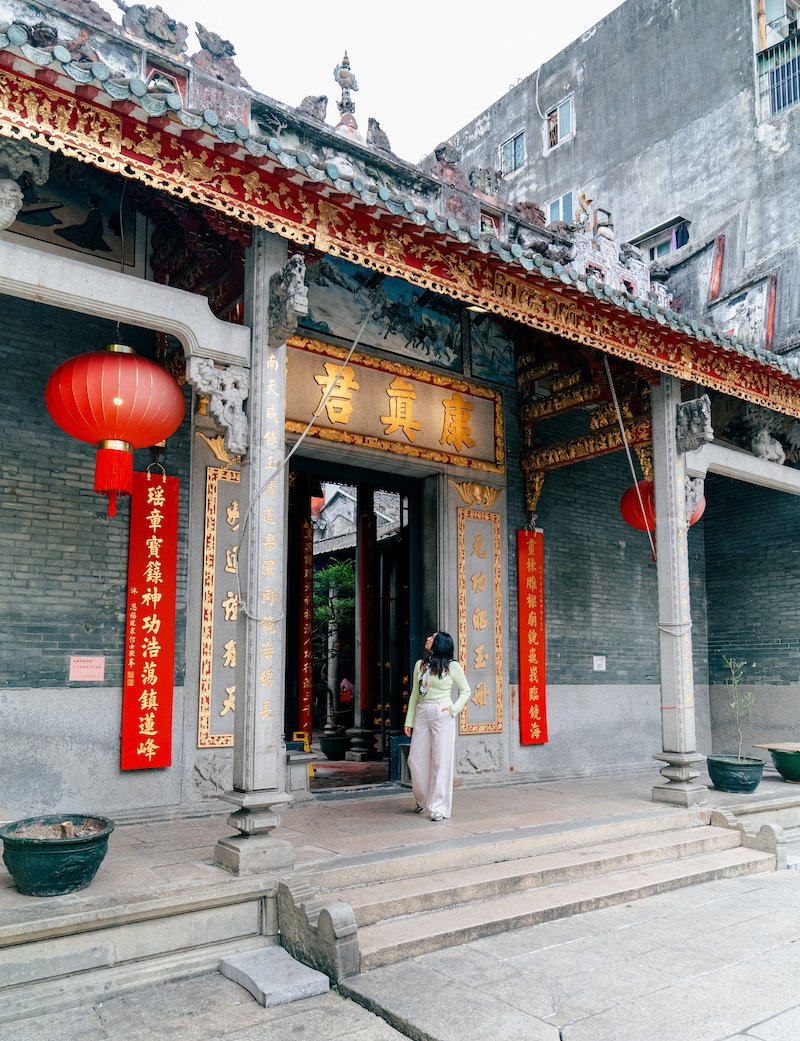
The red lanterns have died into its center of UNESCO, remains of the lunar New An, even suspended from Catholic Catholics in Gothic style. Taoist temples just at the corner of the street, incense swirling towards the sky.
Driving in its historic center, the occasional dark interjection of Venus: “A guy jumped from this balcony after playing his savings. It’s common here to be honest.
The refusal to shirk history. The elegant splicing between Chinese and Portuguese culture.
How tradition and heritage are celebrated and preserved at the same time as colossal modernity and the sparkling technologies of tomorrow are defended by the city.
Macao’s impeccable uniqueness.
Explore the city through the eyes, the heart and the knowledge of a room. The best way to explore a city.

The path to the heart is through the stomach
Home House of Portuguese and Chinese dishes in the family home of Venus. His father spends hours in the stove on our behalf.
Six dishes to taste: Coda with eggs and potatoes, clams thrown into black beans, fresh flesh mussels, a glory of the morning, a wok, a stir of Chinese tomato and chicken and potatoes. Glasses of apple cider vinegar.
Beyond the house, Macao’s culinary scene being unpretentious and delicious.

Breakfast with a dark sum with the mother and grandmother of Venus. Si-Pao Pillowy, Cheung Fun, Har Gau. PO PO Taping the tablecloth twice with his fingers to allow the server to stop pouring because his cup of tea is adequately filled.
Albergue 1601, a Portuguese heritage restaurant in the preserved district of St. Lazarus, serving traditional dishes.
Fresh octopus salad entrances (Polvo salada) and crispy salt cod kibble (Bolinhos de Bacalhau), followed by a hearty seafood rice (arroz de Marisco), grilled chicken piri-piri (churradeco free) and white wine lemon timing. With an exhilarating Malbec and the famous sawmill pudding (Serradura).

On the other hand, the Nam Ping Cafe, a local Chaan Teng nestled in the center, with its traditional Cantonese fast food dishes such as French toast, macaroni and milk tea.

Even tripping on a fresh and authentic Pandesal at the Philippine Anak bakery. UBE cheese and traditional Pandesals sprinkled with fine breadcrumbs.
Maybe the best thing we ate was the paste pies of the Lord Stow bakery. Crispy, puff pastry and most. Fill in creamy, rich and sticky. Balanced softness.
“These are better than those of Portugal, right?” Ask Venus lightly, holding cannon fingers at my temple. We are all trying not to laugh while we devote our second pies of custard.

This classic East trope meets west
It is an unbearable shot, but Macao is really a brilliant case study on the way in which the eastern and western culture can sit side by side in a metropolis and feel natural.
Macao was a Portuguese colony for almost 300 years, with sovereignty exchanging back and forth between China and Portugal.
Since the return of Macao to China at the end of the 90s, the Portuguese colonial influence has always been anchored in daily existence, from custard with architecture to ceramic tiles and signaling panels.

Perhaps the reason why I am so fascinated by the softer hybridization of the East and the West is that I have a Philippin-Spanish heritage, and that I am deeply aware of the trauma that can be left by colonization.
The Spanish occupation of the Philippines lasted 333 years. A brutal colonial period smeared with bloodshed and violence.
A large part of the Philippine culture now stems from Spanish influence, not only in a tangible way in terms of architecture and food and names, but also religion, tradition and much more.
The Spanish were not the only ones to have tried to occupy the Philippines: America, Japan and even Great Britain tried to take control of the islands.
On the other hand, while Portugal occupied Macao with certain military conflicts, their rule was not mainly violent.

Visiting Macao and seeing how the city prosperous with apparently peaceful cultural coexistence is a concept that I find foreign and fascinating accordingly.
Salt pliers on the thought above, of course, because I am not a historian and my idealized tourist point of view limits any nuance to this opinion. Maybe I was wrong.
But at the nominal value, Chinese and Portuguese culture seems much more balanced and symbiotic in Macao.

Changed forever
I left Macao with a completely changed perspective on the city. Mainly because I could see Macao’s soul.
Macao is not “simply” a play paradise. It is not “simply” a backdrop of shiny Hollywood films. It’s “simply” nothing.
Macao is a very complex city with a nuanced culture and operating mode which make it irresistibly explorable.
I love to visit places like Macao. Places that make you seem twice, think hard and leave after learning something new.
*
Relevant positions:
5 Macao hidden gems beyond casino floors
How to spend a weekend in Hong Kong: 48 hours in the itinerary of Hong Kong
Eaton HK Hotel Review: Hong Kong’s Owgest Hotel
Travel Source
Discover the world easily and comfortably with Merpati Airlines. From comprehensive travel guides and dream destination recommendations to practical tips, we provide everything you need to plan the perfect trip. Explore exotic locations, find the best deals on flights and hotels, or uncover travel packages tailored to your style. With interactive maps, traveler reviews, and authentic local insights, we’re your trusted travel companion. Start your adventure today!